5 vragen aan Aviva Schulze – Gemeente Leiden
Details
5 vragen aan is een rubriek op NVTL.nl, social media en in nieuwsbrief Het Kanaal. We laten diverse leden aan het woord: leden die al jaren lid zijn, nieuwe leden, studentleden en bureauleden. Wil je ook meedoen of iemand voordragen? Stuur ons een mail.
Dit interview is oorspronkelijk in het Nederlands gehouden en wordt automatisch vertaald.
1. Would you like to tell us a little about yourself?
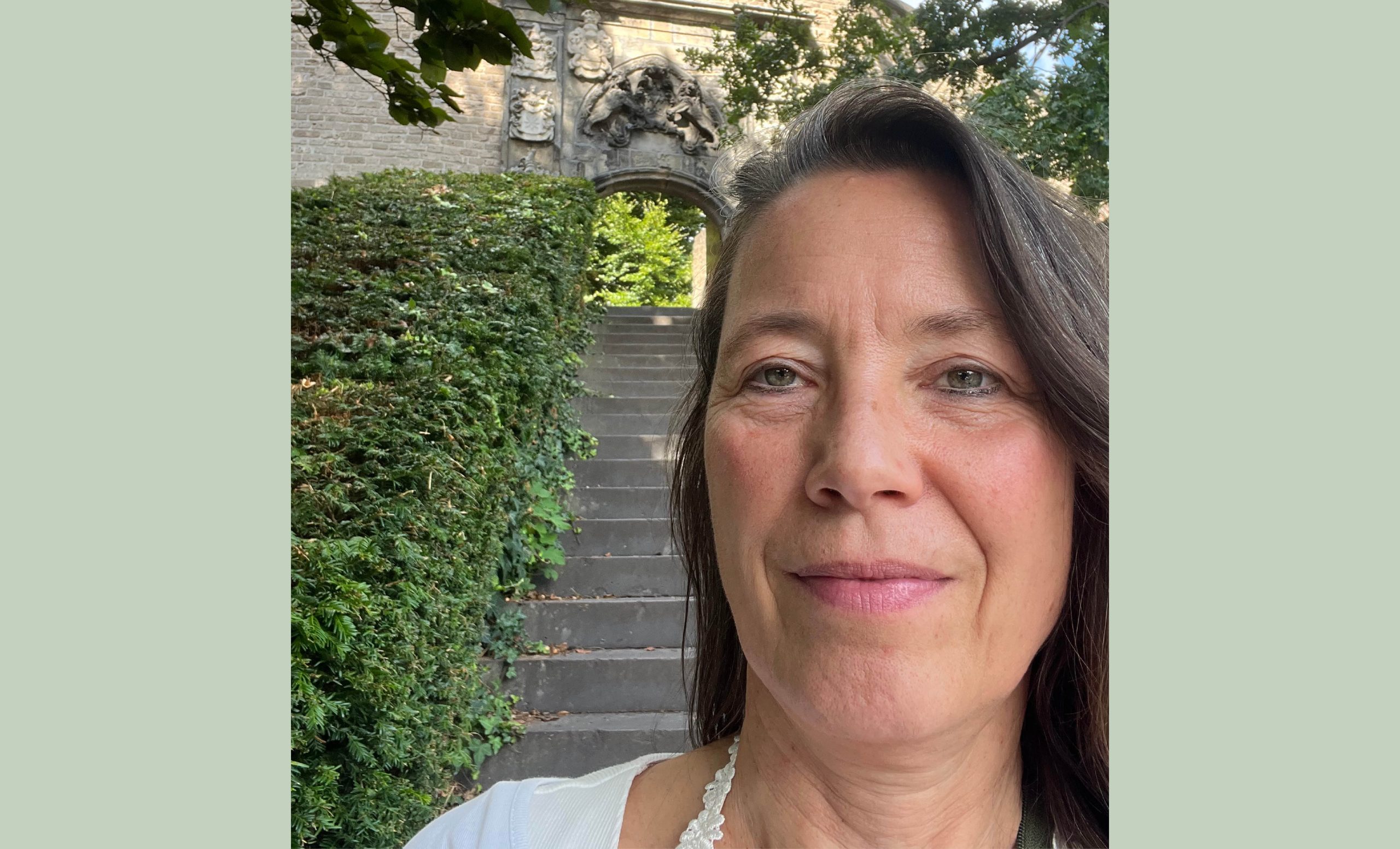
After studying at Larenstein in Boskoop, I continued my studies at the Amsterdam Academy of Architecture, specialising in landscape architecture. Around the time I graduated, I started working as a freelancer for private practices. Initially, I often worked with urban planning firms such as Buro Khandekar, Wissing Stedenbouw, Rein Geurtsen en partners. After graduating from the Academy, I became the first employee at Baljon Landschapsarchitecten. When my second daughter was born, I stopped working for a while, and after the arrival of my third daughter I gradually started working again. Once again, I worked as a freelancer, under the name Atelier Lichtgroen. During the period when the children were at school, I mainly designed private gardens for a while, working in a regular partnership with a landscape gardener.
This is how I came to work for the Municipality of Leiden in 2018. It is a compact city with a compact team. That works well, with short lines of communication and a close-knit group of colleagues who are all pulling in the same direction. I organise the fortnightly Design Meetings for our department, which were started a few years ago by my colleague Frank Kalshoven. They provide a valuable opportunity to exchange experiences and knowledge, sometimes with colleagues from other departments or from outside the municipality. In the daily hustle and bustle, it is easy to end up working in silos, and my natural inclination to facilitate collaboration makes it difficult for me to accept the idea of ‘reinventing the wheel’.
Since my permanent appointment in 2020, I have been campaigning for NVTL membership. And we actually managed to make it happen! As it later turned out, we were the first municipality in the Netherlands to become a member. I would like to work more closely with colleagues from other municipalities. So far, we have managed to do this with Groningen and Rotterdam, in the form of excursions. An annual gathering of municipalities would be great, wouldn’t it? Of course, municipalities vary in size, but in my view, the issues they face are hardly any different. Leiden is a member of a national organisation dedicated to collaboration and the exchange of knowledge in the field of public space management. I would like to see something similar for designers. I am quite a networker, so this is something I want to work on in the coming years.
We are working hard to make the city greener and more sustainable, particularly in conjunction with sewer replacement projects. Entire neighbourhoods are being redeveloped, from façade to façade, with as many different themes as possible being incorporated into the design of public space.
A recent development: since 1 July 2026, we have separated from DLO and become the Department of Public Space Design, bringing together a team of public space designers and traffic designers.
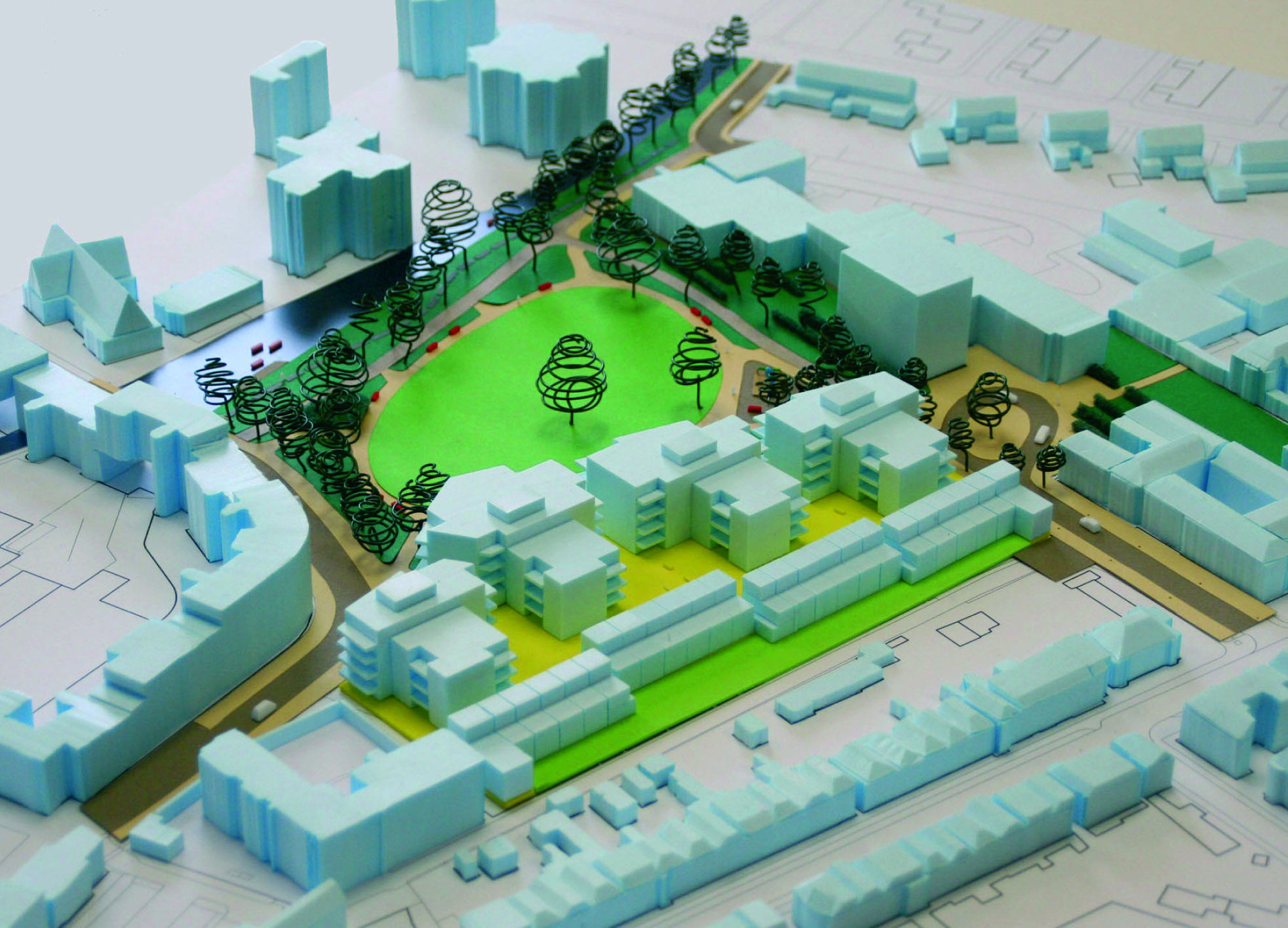
2. Is there a landscape or project that has had a lasting influence on how you see your profession?
Not so much a particular project or landscape, but rather a way of working. At the practices where I worked, urban planning and public space were inseparable. One could not exist without the other. This is why, particularly later on, I found myself surprised by projects where this did not seem to be the case. With cities becoming increasingly dense and facing enormous housing challenges, we as public space designers have a real responsibility. I have come to see that simply ‘leaving it to the market’ does not deliver the kind of results we would like to see for the next 30 to 50 years. The public space requirements resulting from urban densification, combined with the challenges facing cities that are becoming increasingly hot and wet, are not easy to realise.
I would like to see key figures and research established in Leiden to help us maintain and create a liveable city, together with the budgets needed to achieve this. Until now, there has been no budget for replacing or restoring green spaces, although that finally seems to be changing. Leiden is a green and attractive city, but we still lack a spatial framework to guide development across the city as a whole. As far as I am concerned, there is still work to be done.
3. The Singelpark has been named the winner of the World Urban Parks Award 2026. What do you think other municipalities can learn from Leiden’s approach?
My colleague Frank was particularly involved in the Singelpark, so I asked him about it. The Singelpark originated as an urban initiative by Stadslab Leiden, which brought together historians, architects, journalists and the director of the Hortus, among others. They sought publicity, calling on the entire city to contribute to creating the most beautiful and exciting park in the whole world.
Following the development of a park vision and the launch of the project, a competition was organised to define its identity. Lola and studio Karst jointly won the competition and went on to develop a comprehensive design quality plan. It was an inspiring and guiding plan, but not a restrictive one. That is very important for a design process lasting 13 years. You need a certain degree of freedom along the way. After the design phase, residents regrouped into a group called the ‘Friends of the Singelpark’, which is involved in its maintenance and programming. The centuries-old defensive ring around the historic city centre was given a new purpose: the Singelpark.
What can be learned from a project like this is that, as a municipality, you should first and foremost embrace such an initiative wholeheartedly.
The call by the Friends of the Singelpark to think big and create the most beautiful, longest and most exciting park in the world is an approach that should always be at the back of your mind.
We had to learn to ‘let go’ and design together. Back in 2012, this was not yet a widely used approach. It took some getting used to, but it generated a great deal of support. Even part of the maintenance is entrusted to residents, which creates a strong sense of involvement. What do you let go of, and what do you deliberately hold on to? That is what needs to be explored, without losing sight of the coherence of the city as a whole.
Don’t tie yourself down with ‘restrictive’ rules. Instead, work from an inspiring plan and consider how you can inspire the city to take action.
It is also important to hold on to the story and keep it alive. That requires a long-term commitment. The project had to be carried forward across several municipal terms of office. It was also presented as a ‘new brand’, complete with the associated marketing and branding.
Having a good story is important, but so is having a good storyteller. Frank is particularly good at that. The Singelpark is now firmly embedded in the mental map of every Leiden resident, and even of people who come from outside the city to walk there.
The first award, by the way, was the ‘Loop Award’: a continuous historic park around the city where you can walk five kilometres without interruption. On October 9, the initiators of the park concept, the Friends of the Singelpark, along with Frank, accepted the World Urban Parks Award in Istanbul.
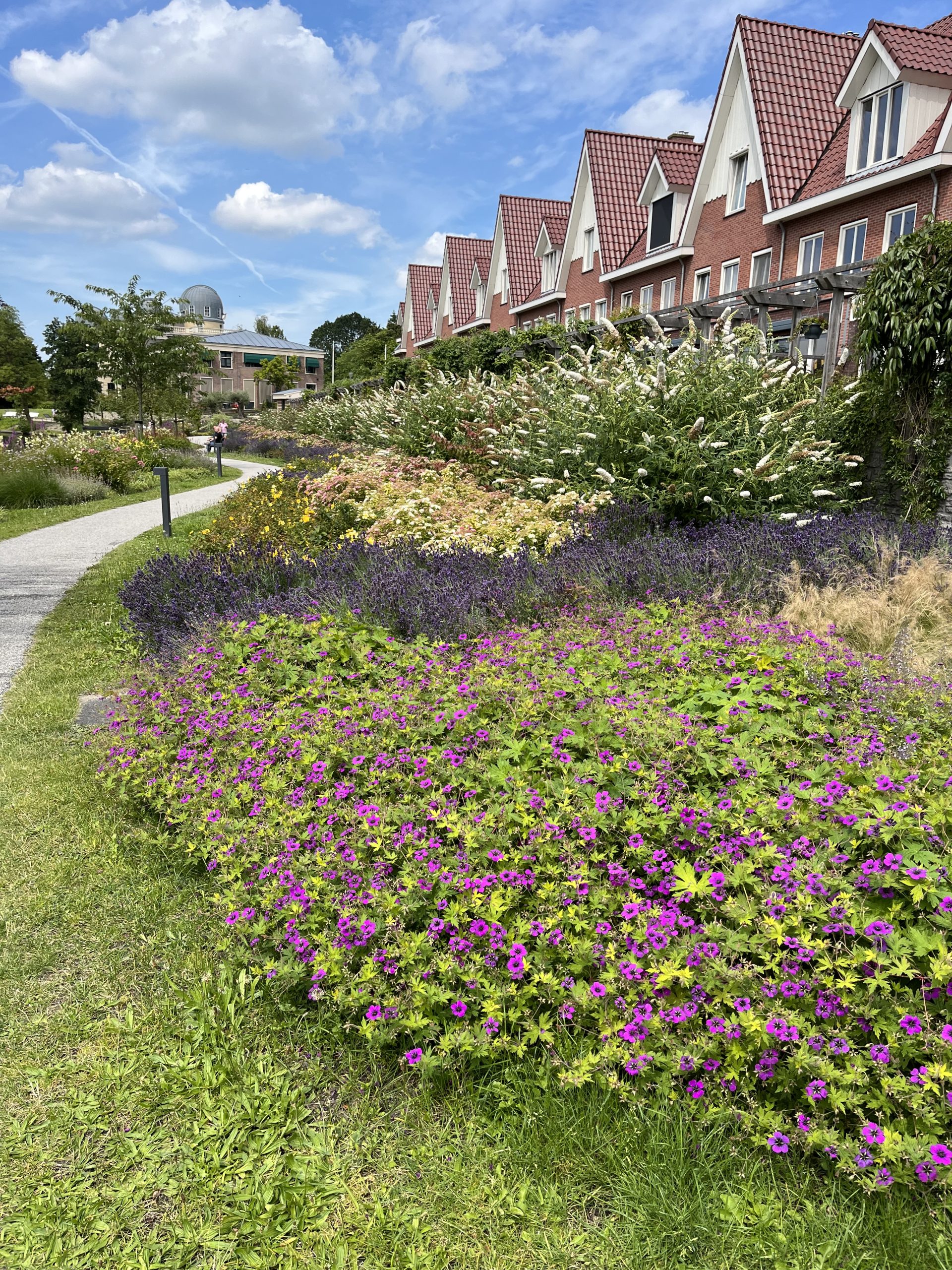
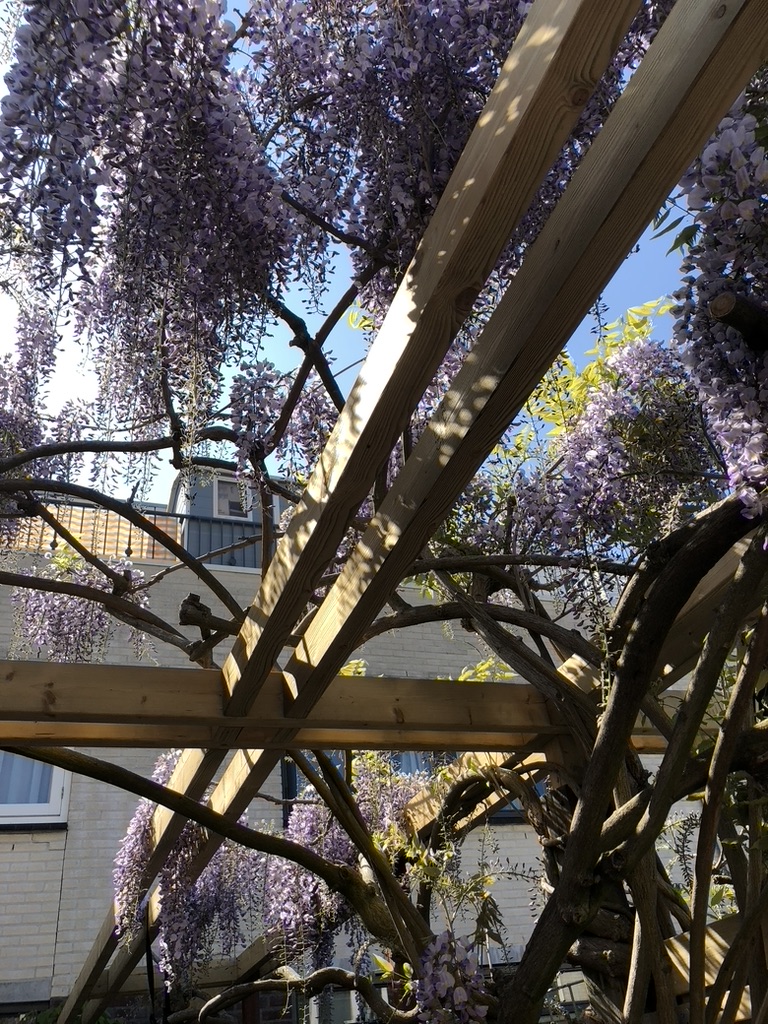
4. What would you like to focus on as the new chair of the examination board at OntwerpAcademie? What do you think deserves more attention in design education?
OntwerpAcademie is a wonderful initiative by Dolf Houtman. As chair of the examination board, I see my role in influencing the programme’s curriculum as a very indirect one. It is now a fairly professional programme, which will continue to build on the path it has already taken. At most, I think more attention could be given to raising awareness among landscape gardeners about climate adaptation, sustainability and biodiversity. These are everyday issues throughout urban areas, where a great deal of privately owned space is still covered in paving.
A few years ago, I attended a presentation by the Municipality of Leuven, which taught me that the municipality had actively approached regional landscape gardeners to share knowledge on these topics. They were keen to promote climate-adaptive solutions in their everyday work for private clients. I could imagine something similar happening in our municipality. If an educational programme were also to take on a role in this, it could have a significant impact.
A one-off collaboration with a landscape gardener in Leiden, on a project I was working on, resulted in paving tiles being removed from a few small back gardens, each only a few square metres in size. Showing people that this makes a difference, does not necessarily involve more maintenance and makes a private outdoor space much more liveable would surely be a great way to put a landscape gardener’s specialist knowledge to use.
5. Which development within garden and landscape architecture makes you most optimistic about the future?
Well, I find that quite a difficult question. To be honest, I have to think about it a little…
I am actually quite seriously concerned. My impression is that, as a country and as a global community, we have woken up far too late. When our Department of Sustainable Living Environment (DLO), which we were part of until 1 July, was established, a film was shown featuring Indira Gandhi’s speech at the 1972 United Nations Conference on the Human Environment. It was a warning about serious pollution and climate change, which would have major consequences for everyone on Earth, and even more so for people living in poorer countries. The fact that it is only now that the alarm is really being sounded is quite disappointing… And the fact that there are still ‘climate deniers’ among us is even more so!
What does give me some optimism, however, is that people are still choosing our wonderful profession, or related degree programmes such as ‘Landscape and Environment Management’. That gives me hope. They are interested, often driven and eager to learn. There could certainly be more of them, especially people choosing to become green space designers or landscape architects.
The fact that we in Leiden still have a strong design department dedicated to public space, and that it is increasingly gaining recognition, also gives me hope. Not all municipalities, particularly smaller ones, still have this kind of resource. During guided tours of projects for interested colleagues from other municipalities, you often hear them lamenting this. Especially when you want to establish long-term plans and make a real difference to a city. Having an in-house design team that is independent-minded, critical and proactive seems to make a tremendous difference.