National Weekend of Flower Bulbs
Details
National Weekend of Flower Bulbs
Dates: 4 and 5 October
Location: Fort Maarsseveen from 2:00 pm to 3:30 pm, and all weekend throughout the country
On Saturday 4 October, in honour of National Flower Bulb Weekend, organic flower bulbs will be planted between 2:00 and 3:30 p.m. at Fort Maarsseveen. Will you join us?
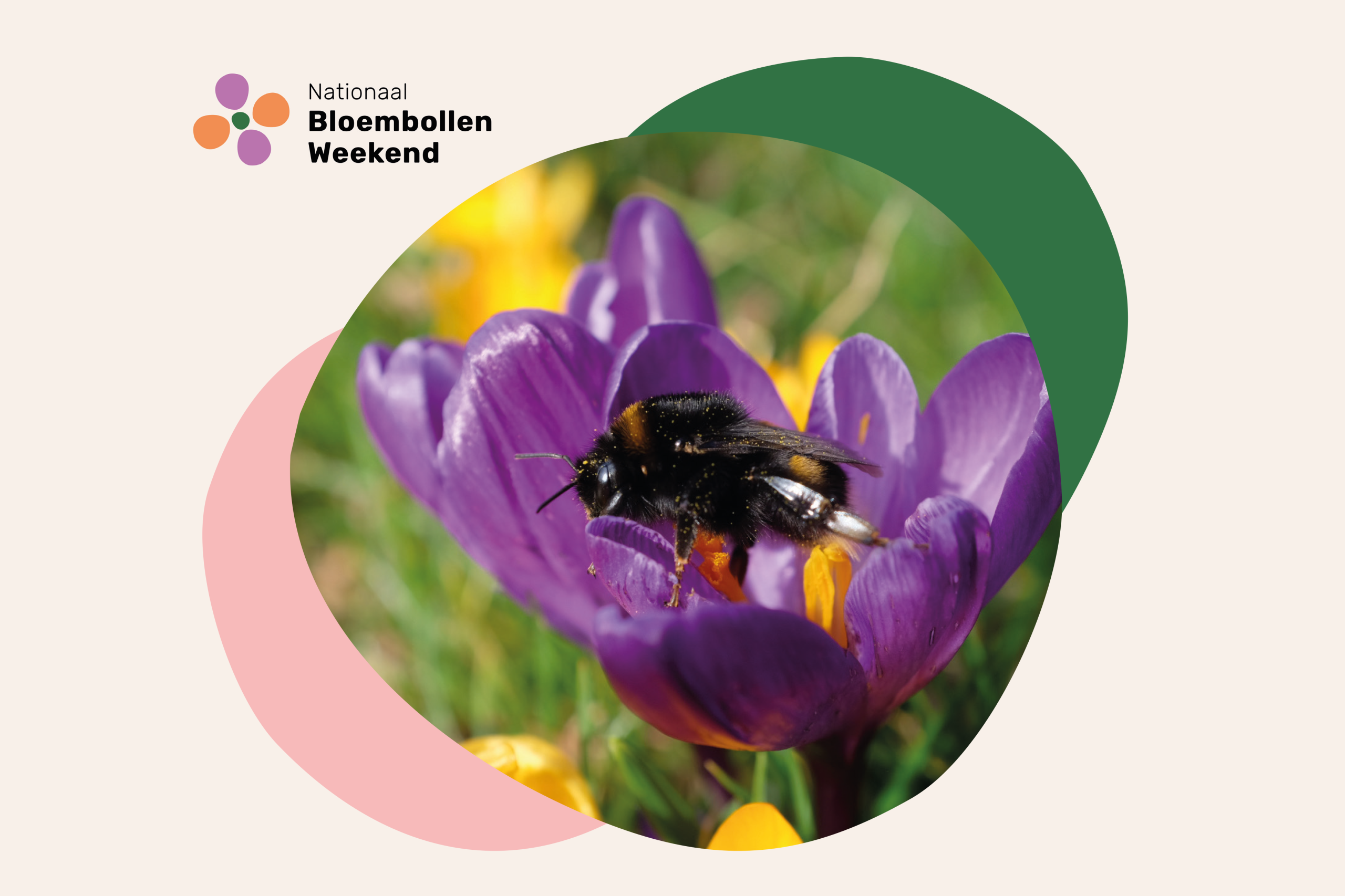
More organic flower bulbs means more toxin-free spring bloomers and therefore more healthy food for wild bees and bumblebees. And that is desperately needed! The campaign was set up in collaboration with Stichting The Pollinators, Stichting Steenbreek and Stichting Bee Foundation and aims to encourage the planting of organic spring flower bulbs in the autumn.
More insects needed
NVTL office member and landscape architect Ada Wille is the brains behind the organic flower bulb campaign. The reason for this is the sharp decline in insects in recent years. Research also shows that the decline in insects now amounts to around 75 per cent. Wille: ‘It’s all hands on deck now.’
Due to climate change, bees are emerging from hibernation earlier and earlier. They need a lot of energy and immediately start looking for nectar. But because there are often too few flowers in early spring, they cannot find enough food and do not survive. Early-flowering species such as snowdrops, crocuses and grape hyacinths are therefore lifesaving: they provide nectar exactly when pollinators need it most.
Wild bees are indispensable to our ecosystem. Many flowers and food crops need pollinators. And because wild bees only fly a few hundred metres, every garden with early-flowering organic bulbs makes a difference.
Accessible action
Planting organic flower bulbs is easy and accessible to everyone: children, adults, the elderly and businesses can all participate. Early bloomers such as crocuses, snowdrops and grape hyacinths help insects through the difficult period in spring. ‘Everyone can contribute,’ says Wille. ‘The Netherlands is truly a bulb country; everyone looks forward to that first crocus or snowdrop.’
Tom van de Beek of The Pollinators adds: ‘With this accessible campaign, we are raising awareness about the importance of pollinators and biodiversity. Planting organic bulbs in the autumn gets people actively involved, and in the spring they can enjoy the flowers and the bees that benefit from them.’
Accelerating
With the National Flower Bulb Weekend, the initiators want to encourage as many people as possible to plant organic spring bulbs. ‘We must do everything we can to stop the decline in biodiversity,’ says Wille. ‘Progress is too slow at the moment; we need to accelerate. With this campaign, we want to make everyone aware of the need for toxin-free food for bees. Bees and bumblebees are essential to the ecosystem. I feel that the need to plant organic spring bulbs early is not yet fully recognised, even by professionals such as gardeners or designers.’
Organic bulbs Another important consideration is that pesticides sprayed on flower bulbs can have a negative impact on the health of pollinating insects. These toxins also end up in the soil and groundwater. Therefore, we recommend being mindful and planting pesticide-free flower bulbs. ‘It’s better to buy less, but buy organic,’ emphasises Wille. More information about the effects of toxins on pollinators can be found in this study by the Bee Foundation (in Dutch).
Flower bulb package for bees and bumblebees
In collaboration with Natural Bulbs, a specially curated, organic flower bulb package is available: the Pollinator Package. This package contains 50 carefully selected flower bulbs, which will grow into a colourful mix of flowers in the spring that are particularly attractive to pollinating insects such as bees, bumblebees and butterflies.
With this pack, you can directly contribute to the food supply of these indispensable animals — and enjoy a blooming garden or balcony yourself.
For up-to-date information, visit bloembollenweekend.nl.