5 questions for: René van der Velde – University of Technology Delft
Details
5 questions for: is a section on NVTL.nl, social media and in newsletter Het Kanaal. We offer members a chance to speak. Members who have been in membership for years, new members, student members and bureau members. Would you like to participate or nominate someone? You are welcome to do so, because we are always looking for new inspiring stories! Send us an email.
1 – Who are you, what is your background, and what do you do?
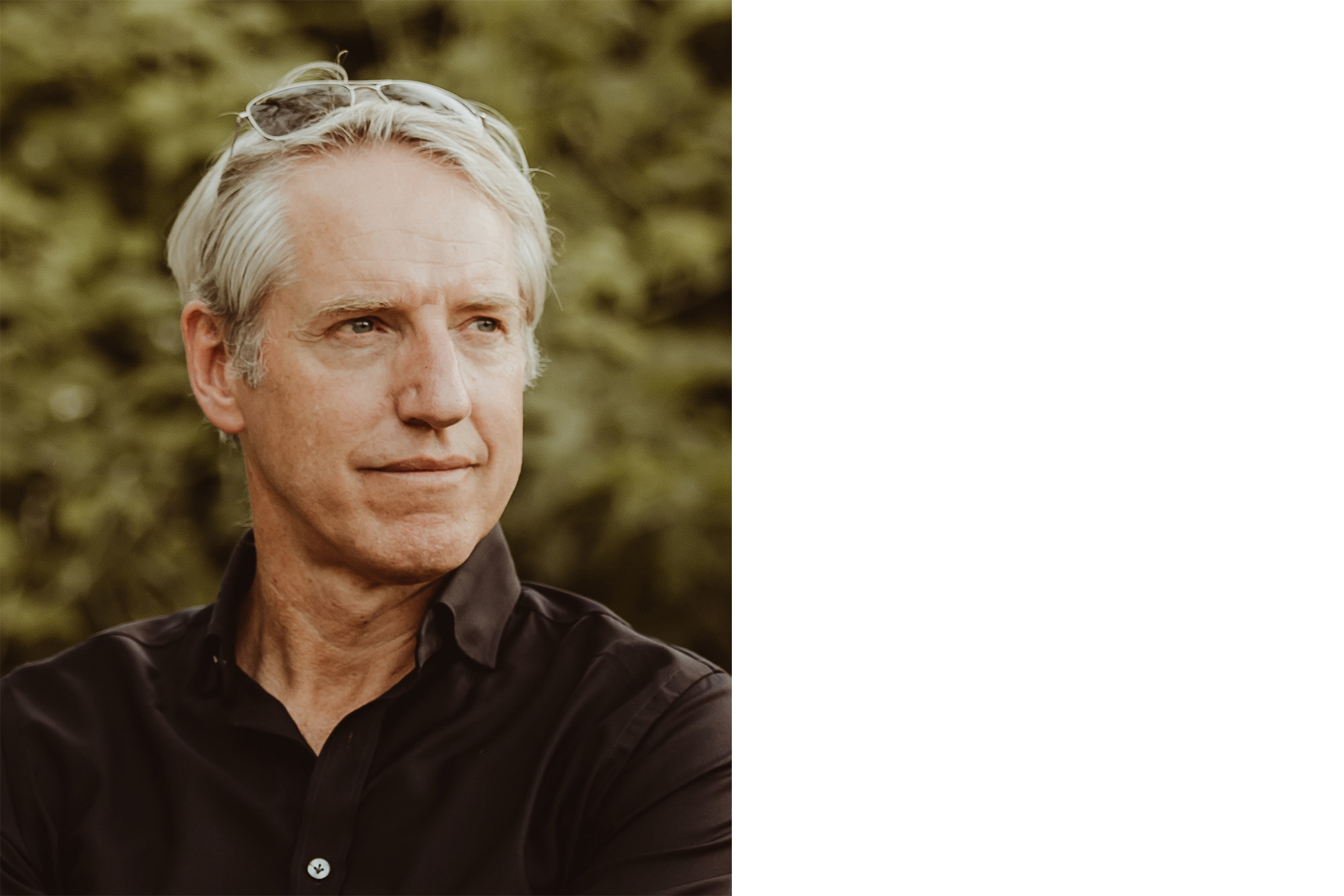
I am an associate professor at the Faculty of Architecture and the Built Environment at Delft University of Technology, where I teach in the Master’s programme in Landscape Architecture, which I also developed in terms of curriculum and organisation during its founding years (2007-2010). I currently also lead the landscape architecture research section and, within that, the urban forestry research cluster.
My background is somewhat unusual: I come from Australia (but have Dutch roots) and initially trained as a Forest Ranger before switching to landscape architecture. I studied at Greenwich University and the Academy of Architecture, and then obtained my PhD at Delft University of Technology.
Until I started working in Delft in 2007, I worked in design practice on projects such as the underground gas storage facility in Langelo and the development vision for the IJ-Oevers in Amsterdam, at Alle Hosper’s office. I also had my own practice in Melbourne, where I worked on the design for Federation Square, among other projects, and taught at RMIT University.
What is also somewhat unusual is my interest in trees, forests and nature on the one hand, and the city and urban life on the other. But that combination is less strange when you look at the challenges facing our profession: many of our problems – and solutions – lie at the intersection of these worlds.
2 – Would you like to tell us something about your main research at TU Delft?
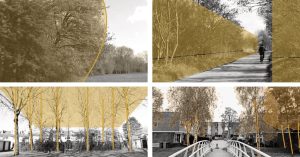
In terms of research, I have been focusing on urban forestry for a number of years; on how the urban forest mosaic (the system of tree-dominated spaces within the city) can be better understood and utilised in bringing together the biophysical and social fabric of cities, thereby helping to solve problems such as climate adaptation, social cohesion and biodiversity.
To achieve this, my group and I are developing knowledge, methods and tools covering a wide range of topics, from tree architecture, tree language and the history of the urban forest mosaic, to data and tools such as i-Tree, mobile forestry, new forms of care with urban trees, and concepts such as forest urbanism.
My work is supported by a research fellowship from the VHG and research grants from, among others, top sector ClickNL. I work extensively with municipalities, neighbourhoods and consultancies through “action research”. Students in the master’s track in landscape architecture can also graduate in Urban Forestry.
3 – Where does landscape architecture education stand in the Netherlands, and what are its greatest achievements and challenges?
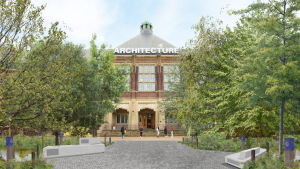
While setting up the master’s track at TU Delft, one comes to realise how versatile and mature landscape architecture education in the Netherlands actually is. The only thing missing in terms of master’s programmes (and therefore admission to the register) was the route from building sciences (TUD), in addition to the routes from life sciences (WUR) and Arts & Humanities (AvB). Now we effectively have all flavours of landscape architecture education in the Netherlands, reflecting the international situation. In addition, there are bachelor’s programmes in Velp and Den Bosch – from which one can continue studying in Wageningen, Amsterdam and Delft – or from which one can enter the professional field. For a number of years now, we have also established a fruitful collaboration with the DSL – the Dutch School of Landscape Architecture, a platform where we exchange ideas and work together on important themes. Erasmus Brussels University of Applied Sciences and KASK & Conservatorium (HOGENT – Howest) have also recently joined the DSL.
In terms of generic knowledge and skills, the programmes are comparable and of a high standard, while at the same time complementing each other in terms of their approach. The level is regularly assessed during visitations, which are embedded in the entry requirements for the landscape architecture register. These entry requirements (and the register itself) reflect the maturity and self-evidence of the field in the Netherlands. This vital field, in turn, needs well-trained landscape architects. The quality of landscape architecture education is therefore partly due to the interaction between practice and education. A degree in landscape architecture from the Netherlands is therefore highly regarded, as can be seen in the number of applications from foreign students for courses each year.
Despite this strong position, there are challenges. Practice – and, by extension, education – must adapt to a rapidly changing world that requires different knowledge, skills and attitudes. One of the biggest themes for our field is the limits of the planet (and its ‘micro-parts’: regions, areas, public spaces and places). We need to train landscape architects who are even more aware of the various possibilities and impossibilities and who seek solutions on both a local and global scale. Integral thinking, doing more with processes and actors, thinking more in terms of time and scale levels. Other “external” factors also remain a challenge, such as a government that suddenly wants to cut back on higher education, or the rise of AI, which can take a lot off our hands, but perhaps too much.
4 – What is the ideal curriculum for the landscape architect of the future?
A programme that actively listens and responds to practical developments, but also has an overarching vision of the world and the role of the discipline within it, has a future. One develops this vision together with colleagues and through research, but also in consultation with other programmes within the DSL and internationally. The ideal curriculum starts from the basics of the field, but continues to explore the boundaries of that same field, anticipating a changing world and taking an active stance in it. Furthermore, for us in Delft, the basis for the curriculum is still formed by the four principles that Sébastien Marot summarised so nicely: building on the characteristics of a landscape (place), the choreography of landscape material and space (space), staging and cultivating new circumstances (process), and creating relationships with boundaries, adjacent areas, the environment and context (scale continuum).
5 – TU Delft is the initiator to host and organise ECLAS 2026 with DSL. What is your ambition for this conference?
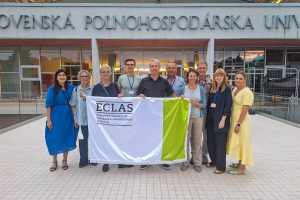
Marot’s latter principle is the common thread running through next year’s conference theme. A future for landscape architecture in which the scale continuum is leading, but now also the scale of the planet. In line with this, we want to focus on the theme of Care as a new dimension for the field. Care requires taking into account the limits of planetary systems, taking responsibility for human interventions, and using design power to create landscapes that support life. The title of the conference – Take Care: Planetary Landscape Architecture – confirms the power of landscape architecture to navigate this complexity and contribute to a meaningful, fair and resilient future.
In addition, we are working on a programme that offers space for in-depth discussion and lectures, but also for interaction, feedback and exchange. We want to involve not only teachers and researchers, but also practitioners, from design agencies to policymakers, related disciplines and social actors. With this format, we want to work towards a shared statement from all participants to the outside world: this is how we must move forward with the planet and each other.