Consultation Integrated River Management Programme
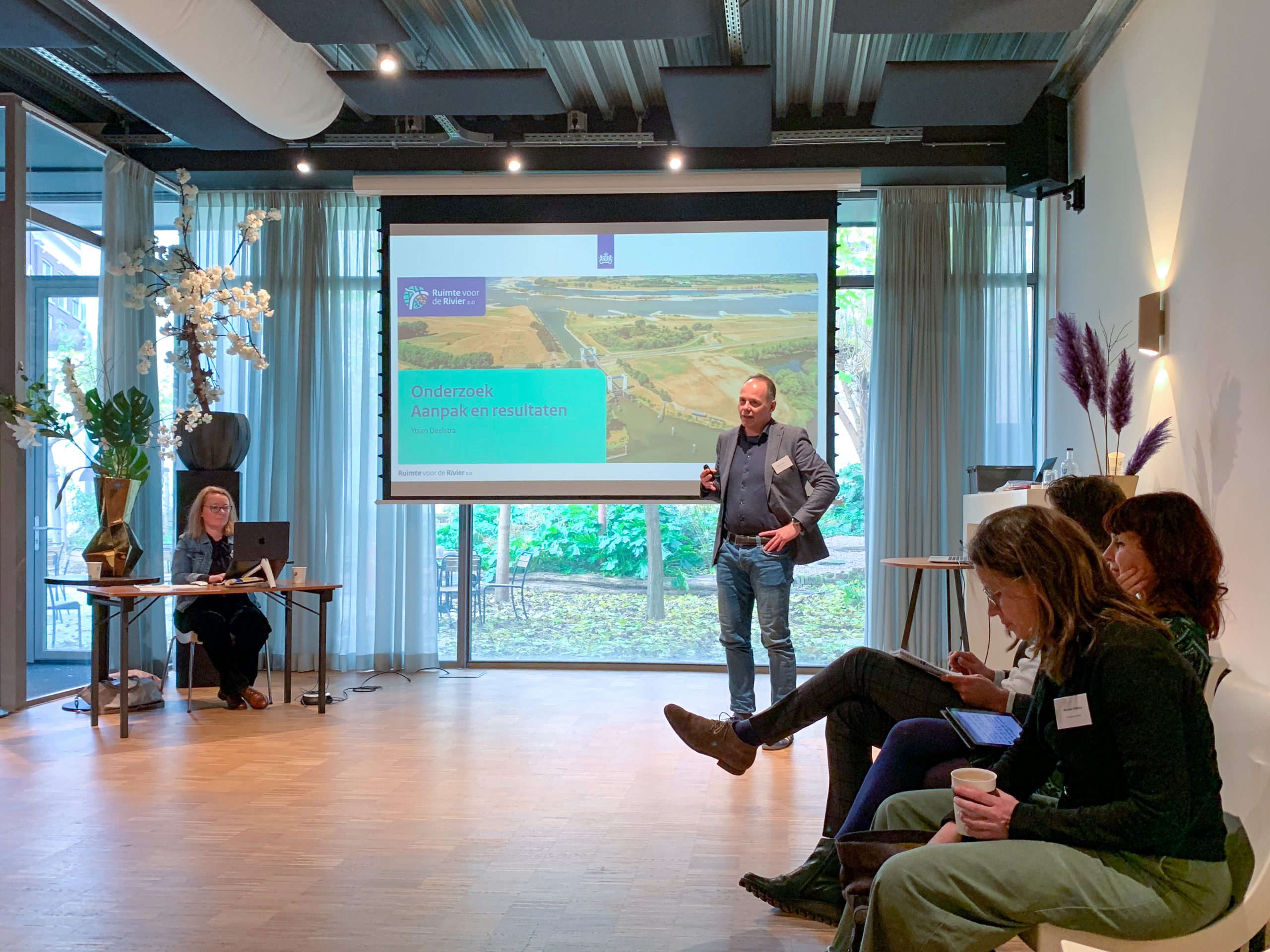
On 2 December 2025, together with fellow social organisations, we were invited by Overlegorgaan Fysieke Leefomgeving to meet with the Ruimte voor de Rivier 2.0 (Integrated River Management (IRM) Programme) programme team. The central question we discussed was: what is important when making choices about the future design of the river area?
Themes that were discussed included: good conditions for inland shipping, space for recreation, recreational areas near (new) cities, an area-specific approach, good ecological conditions and opportunities for (migratory) fishing, spatial quality and good preparation for implementation.
NVTL board member Shera van den Wittenboer and our office members Pieter Schengenga and Robbert de Koning are actively contributing to the vision that we at NVTL are promoting for the Room for the River 2.0 programme. On Tuesday, we emphasised the dual objective of Room for the River 1.0: incorporating spatial quality as an important added value across scales, timeframes and themes.
The dual objective in Ruimte voor de Rivier 1.0
- increased public support (served multiple social objectives);
- gave projects more substance and broader social and cultural significance;
- provided flexibility at the administrative level when weighing up interests;
- promoted progress in the processes;
- provided scope to use the (sometimes unpleasant) water measures
- to give an area a boost and embed it in ongoing (regional) projects and programmes;
- led to an integrated approach to the projects;
- and more creativity in the solutions.
Spatial quality
- plays a role at all levels. It is therefore important to give this theme a full role at both the national and local levels.
- plays a role throughout the entire process. This includes weighing up alternatives in the exploratory phase, considering how to assess spatial quality in the contract phase, and how to safeguard it in the implementation phase. It should be the common thread in every process.
- is not an extra. It is not something that can be added or removed. It is about taking a broad view and expressing multiple qualities, goals, ambitions, opportunities, etc. in conjunction with each other. The Q-team for the river was also multidisciplinary in composition.
When deployed in the right position, landscape architects play a key role in complex decision-making processes. This is precisely because of their natural tendency to seek out the essence and coherence across time, scale and themes, thereby facilitating dialogue between different disciplines.
To be continued in January during the second meeting with programme team Ruimte voor de Rivier 2.0.