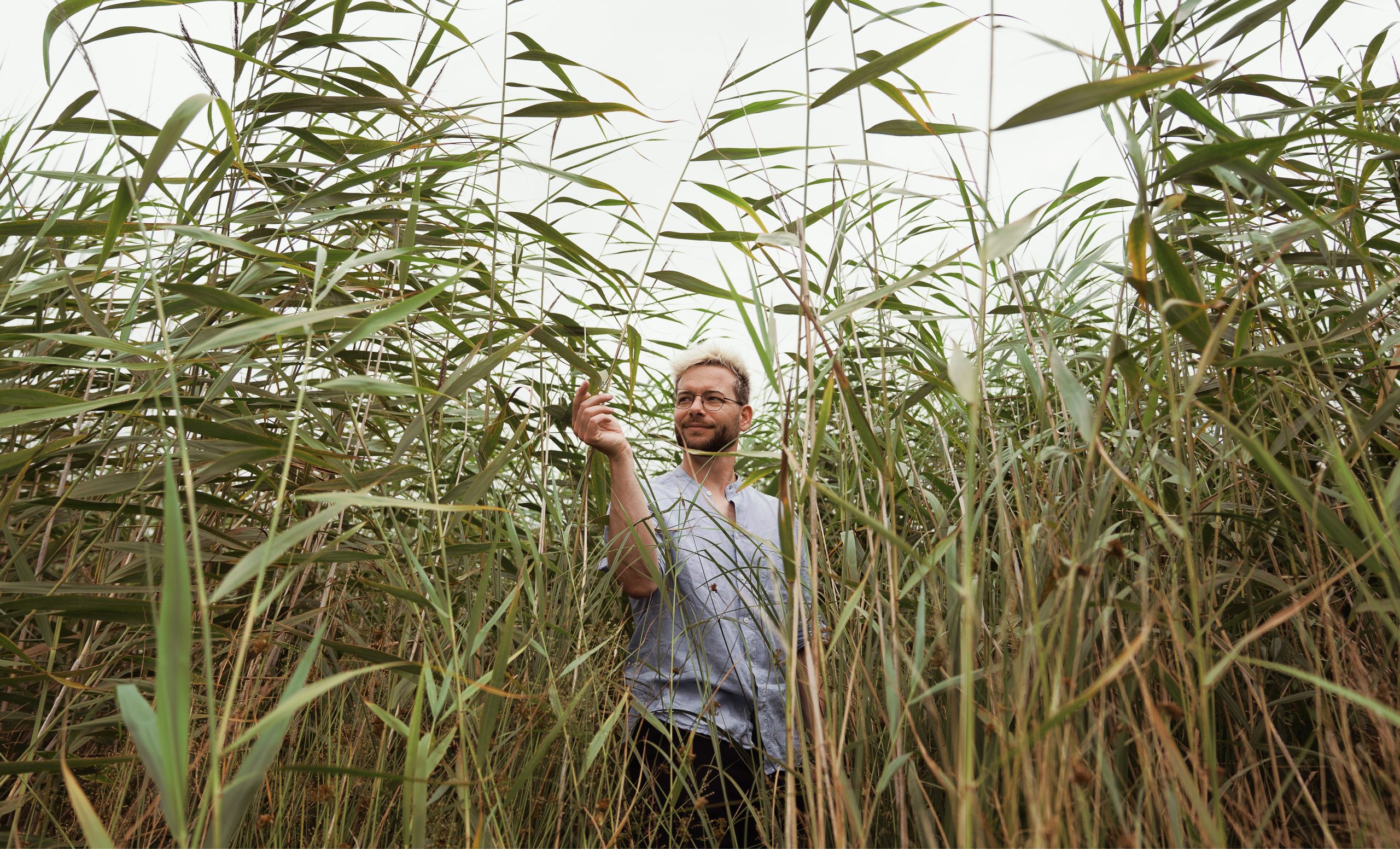
5 questions for Remco van der Togt
Details
5 Questions For is a column on NVTL.nl, social media, and in the newsletter Het Kanaal . We give the floor to various members: long-standing members, new members, student members, and board members. Would you like to participate or nominate someone? Send us an email.
This interview was originally conducted in Dutch and has been translated into English by NVTL.
1. Who are you, what is your background, and what do you do at BREM landscape?
I trained as a landscape architect in Wageningen. To my fellow students, I was a city guy; you could hardly call the maze-like 1970s suburb of Maarssenbroek or the VINEX development of Leidsche Rijn truly urban, but they were clearly very different from the places they came from. They came from the landscapes we visited on field trips: small villages, winding streams, vast forests. For a guy from ‘the city’, that was fantastic. I can still be completely surprised by the everyday beauty of a place where I get to work.
The fact that these places were largely planned, or had at least been carefully thought about, does not detract from that. For me, it only makes them more interesting. I discovered, for example, that the lake I swam in as a child was part of a land consolidation scheme that Hans Warnau had worked on. So many ordinary places in the Netherlands can be connected to a major designer, while the people who use them often do not even know they were designed at all. Those are the kinds of seemingly self-evident landscapes and places I also try to design: systems that fit together logically, and places with a natural beauty that are allowed to develop and change over time. I think that is one of the hardest things there is, but for me that is also where the fun lies. From that perspective, I try to make large-scale landscapes healthier, strengthen small villages, and select strong planting and materials for public-space projects.
2. Why did you establish BREM landscape, and what did you want to make possible with your own practice?
I never really had the ambition to start my own practice. After graduating, I worked very happily at Strootman Landschapsarchitecten for more than ten years, until at some point I began to feel that I needed to work in a different way. Even after a lot of searching and some good conversations, I could not find a place that matched that feeling. Only after some time did I arrive at the not particularly revolutionary insight that I could simply start working for myself. At least then I would have a place in which to figure it out.
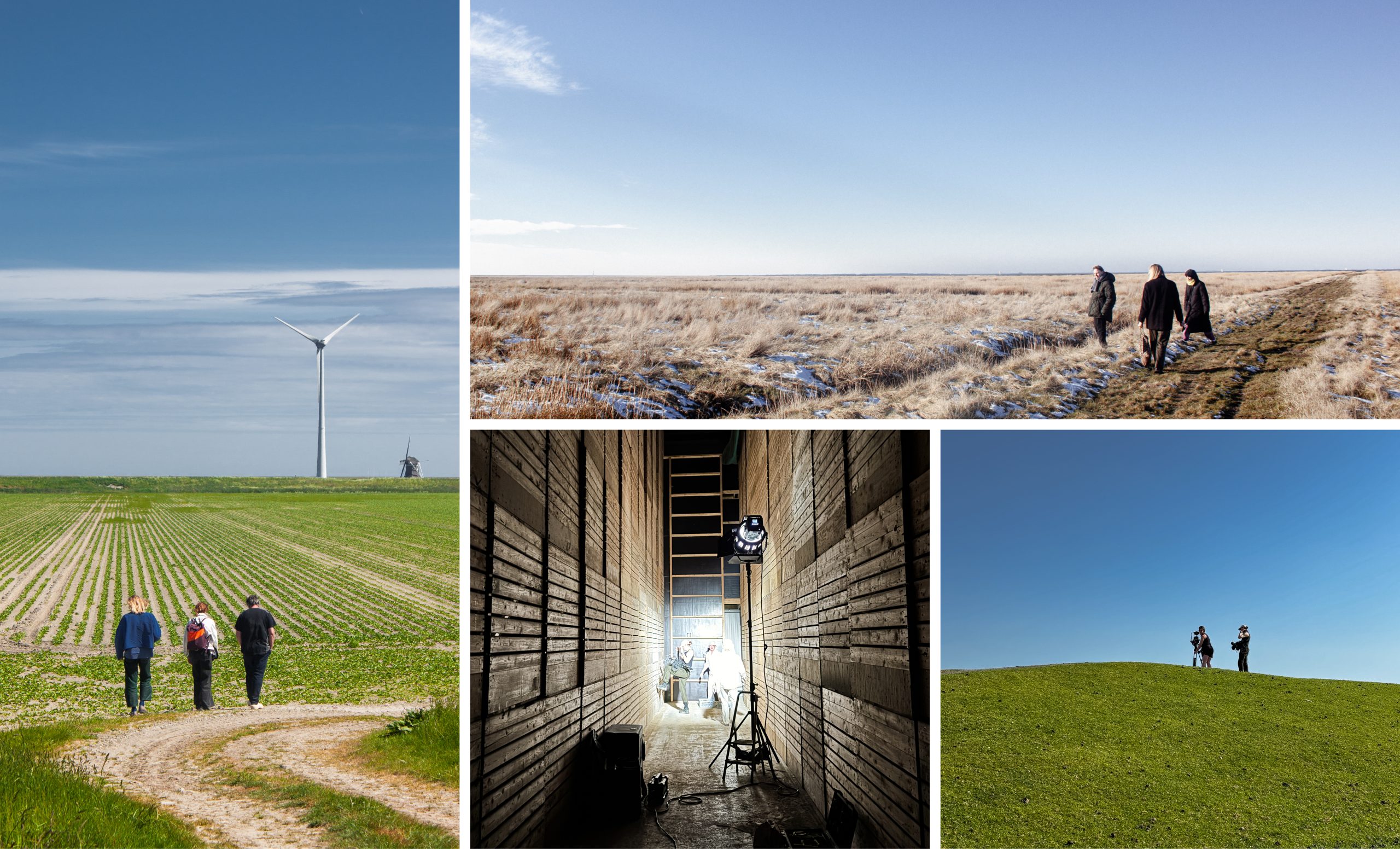
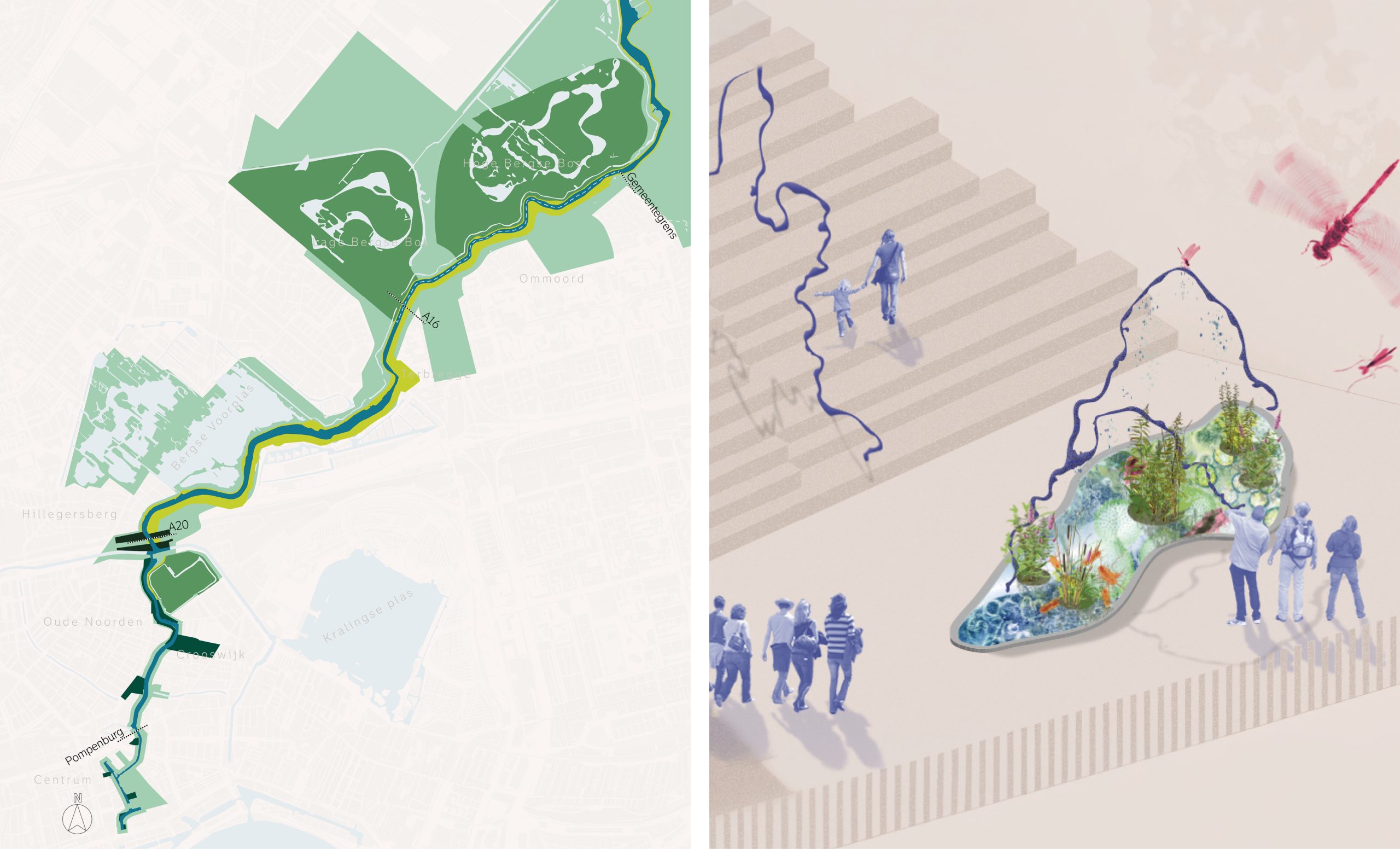
The practice officially started at the end of 2024, and I am gradually getting a better sense of the direction it should take. My provisional conclusion is that, for me, the practice is mainly a tool that allows me to do lots of different things. That way I can develop and learn new things, which is really what I enjoy most. I therefore consciously choose to have a diverse portfolio, something that is also much easier with your own practice. For example, I made a Water Atlas for the Rotte with Jan Oosterman and Matthijs Willemsen, I am designing a playground together with architect Klaas Jan Geertsema, I am making a film about salinisation with De Onkruidenier and Anastasija Pirozenko, and I am also working on public space in the heart of Amsterdam.
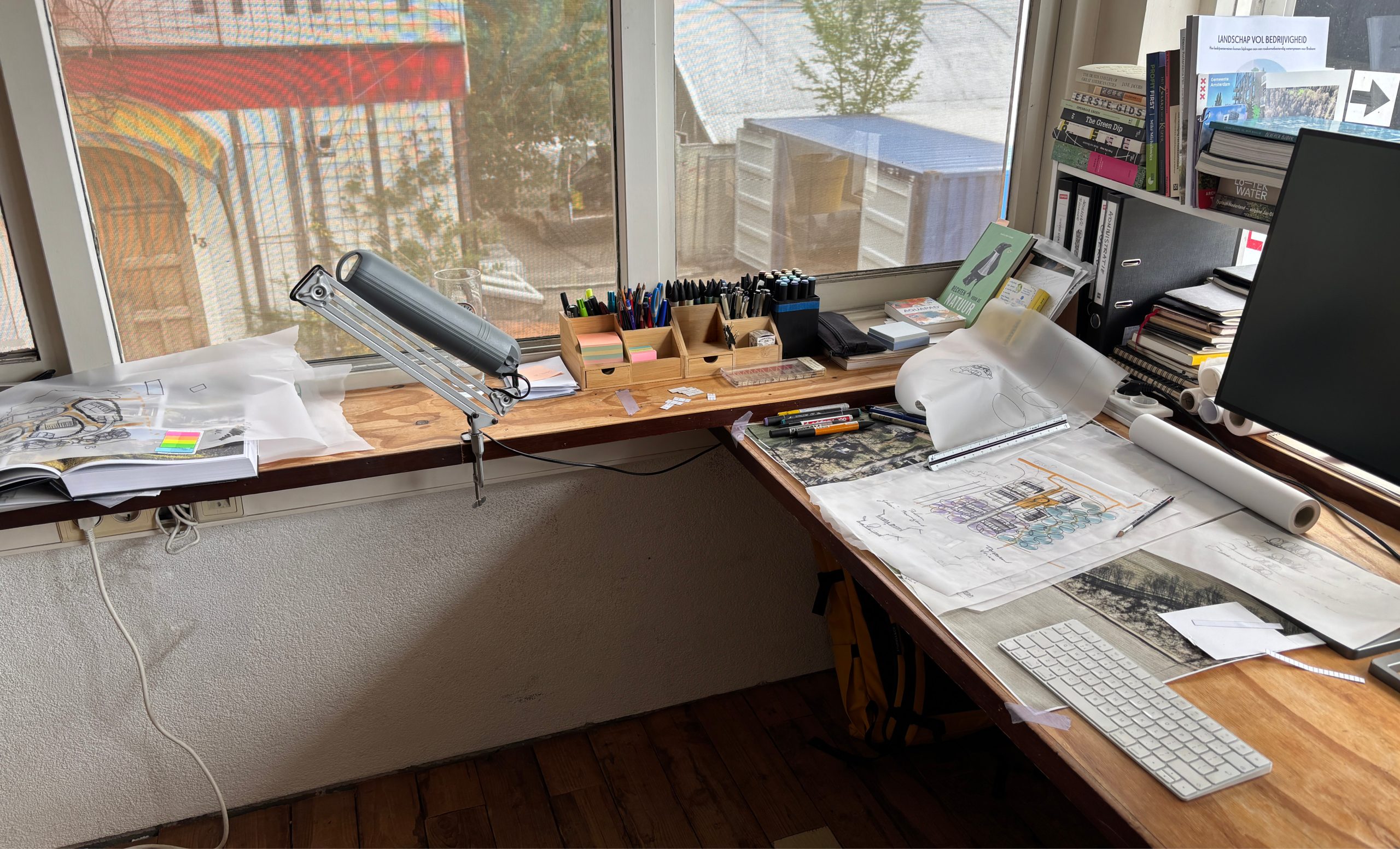
My practice is based at De Nijverheid in Utrecht, a creative hub full of people who do not work with landscape, but with dance, film or paint. I learn a lot from that: how to look and think in different ways, and how to give form to your thoughts. It encourages me to work more outside the usual conventions.
3. BREM works “from courtyard gardens and parks to rivers and regions”. At what scale do you feel most at home?
Funny enough, I thought about this a lot when I had just started working; now I hardly think about it at all. Five years ago, my answer would still have been an emphatic ‘the large scale’, and I really wanted to specialise. I mainly worked on complex, integrated projects: long processes, many disciplines, several public authorities around the table, sometimes with an actual conflict as the starting point for the project. Essentially, an enormous puzzle where nobody knows at the outset where it is going to lead.
But when you are a small practice, you are not quickly asked to take on those kinds of assignments. Large projects for large clients often go to large firms. I understand that too. You want certainty and stability, and it takes time to build those up. That took some getting used to, but it has given me so much more in return. Understanding the small scale also makes you better at making proposals tangible at the large scale, and the variety is simply great.
I have concluded that I am a systems thinker; that Wageningen school of thought is simply ingrained in me. I am very good at reducing complex challenges to their essence. At the large scale, with many conflicting interests, that is extremely useful. At the small scale, it works just as well of course, but I look much more closely at the context: how does a place work? What are the challenges? What needs to be solved? Beauty is very important in that search, but I also look with admiration at more poetic designers who approach things in a completely different way.
So, the scale at which I work has become less relevant, while the way in which I am able to work has become much more important. Does the client really want to go for it? Can I collaborate with good people? I am also not the kind of person who pushes everyone in one direction with grand narratives; I try to move in the right direction together with others. Towards a place with room for people, biodiversity, growth and uncertainty.
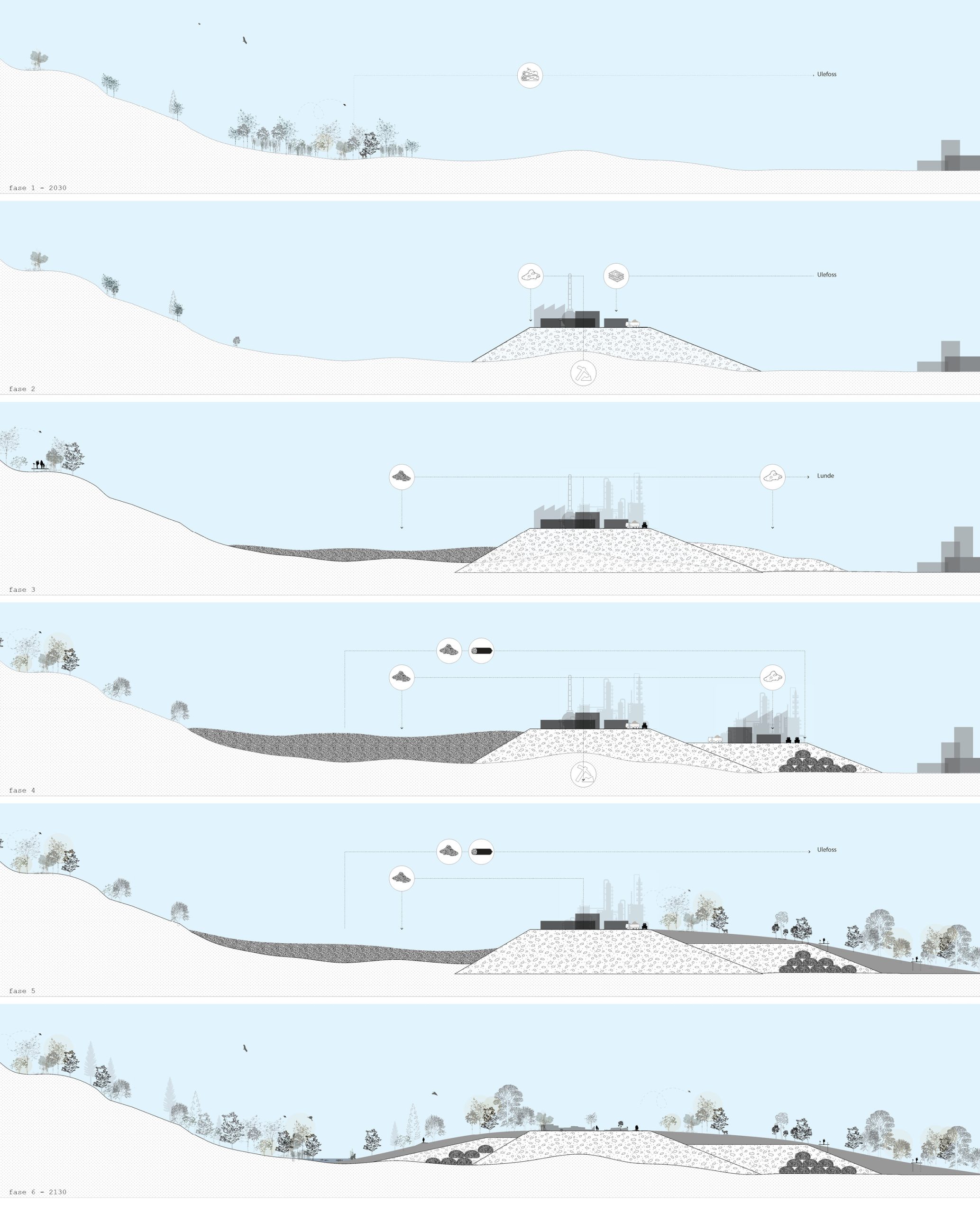
4. In your winning Europan 18 entry, The Mineral Network, you show how a productive landscape can also create ecological value. That search seems to be a recurring thread in your work. How did this way of looking at landscape develop?
I am very happy to blame my former professor Paul Roncken for that. Together with Jonas Papenborg, I graduated with a project on the Ems estuary. Along with the Western Scheldt, it is one of the last open connections between fresh and salt water, yet it has still been completely shaped to suit human needs. As a result, enormous amounts of silt are carried in with every tide, but this is constantly kept in motion, leaving the Ems brown and depleted of oxygen.
Paul made me realise that landscape architecture can be a fantastic force, but that it often takes too modest a role. Instead of merely brightening up or restoring the landscape, can we shape it and get more out of it than we put in? Paul’s term for this was ‘landscape machines’: large landscapes driven by forces such as wind, currents and tides, which in turn generate energy, clean water, biodiversity and food for us. Jonas and I developed this idea further in our proposal Productive Moerdijk, commissioned by the College van Rijksadvsieurs, and it has also formed the basis for several design studios at the Amsterdam Academy of Architecture.
This was also our approach for The Mineral Network. What if we were not allowed to dump waste from a newly excavated mine? That would mean having to purify and reuse the material, not in factories, but in and with the landscape. As a team, we were quickly convinced by this direction. Robert Younger and Giacomo Gallo of New Environments, specialists in regional urbanism, and Karlijn Besse of Other Spheres, among other things a specialist in phytoremediation, complemented one another perfectly. With a system of dikes, polders and new islands, we almost felt that our approach was too stereotypically Dutch, but it turned out to be exactly what they were looking for in Norway: turning the problem around and treating it as an opportunity to create exciting new landscapes.
5. Alongside your work as a designer, you are also active as a lecturer. What do you take from teaching into your own practice?
I have been teaching since 2020, mainly at the Amsterdam Academy of Architecture, but also in Tilburg and Wageningen. I have learned to remove my own ego from the process as much as possible. Now that I’ve become a teacher myself, I can also see what the good teachers did for me. They made me think, rather than telling me ‘how it should be done’. Otherwise, you learn one way in which something can work, rather than twenty other ways that may not work now but might somewhere else. My more experienced students almost always respond well to this. First-year students still tend to try to work out what I personally find most beautiful. I quite enjoy avoiding giving them an answer.
I also try to encourage more experimentation and boldness in teaching. In any case, I am against spending several days making a beautiful image that is then on screen for ten seconds. I encourage my students to sketch and to make quick montages right at the beginning of the process. I have also started applying that more in my own practice. A sketch or montage can show exactly the image a client is looking for. Or it cannot, but then at least I have tried, and I make another one.
Instead of striving for perfection and trying to blow the audience away, I show the process of searching and the cracks. Beautiful, polished images certainly have their place, and I try to make them too, but above all they are a way of strengthening the story I am telling. Ultimately, as a landscape architect you are primarily a storyteller: someone who uses words and images to persuade people to make the world a little better. I cannot imagine a more beautiful profession.