Respond to the ‘Ontwerp-Nota Ruimte’
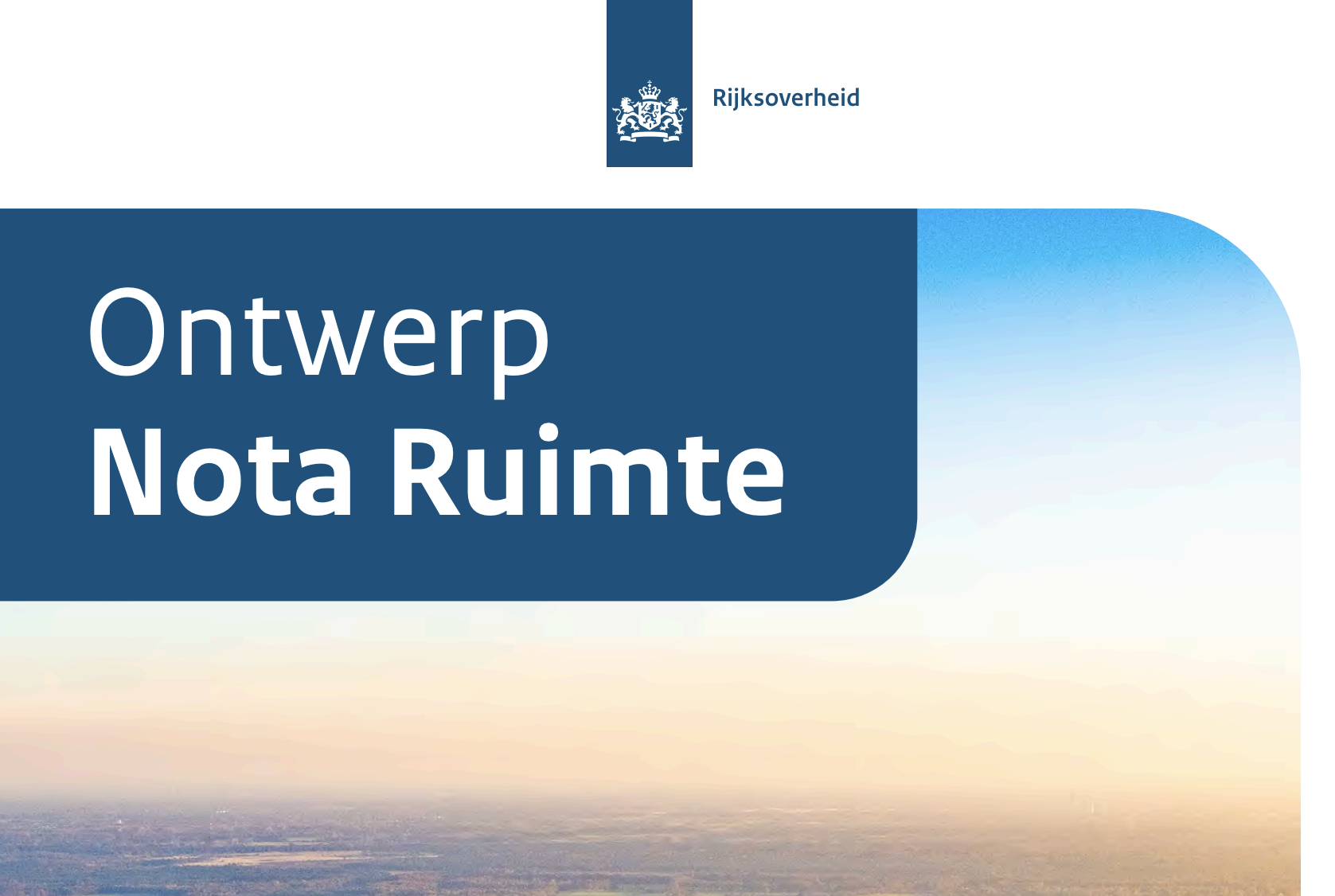
After years of preparation, the time has come: the ‘Ontwerp-Nota Ruimte’ (Draft Spatial Planning Memorandum), has been completed. With this the National Environmental Vision, the government sets the course for the development of the country towards 2050, with a view to 2100. The Draft Spatial Planning Memorandum is available digitally:
Web version Nota Ruimte (in Dutch)
The Draft Spatial Planning Memorandum is available for public review until December 15th. Anyone can respond during this period by submitting their views. The government will consider all responses in the further development, to be finalized in 2026.
The NVTL association will also respond. NVTL members can submit their responses not only to the ministry but also by email to info@nvtl.nl. Responses received before November 3rd will be included in our recommendation to the Ministry of Housing and Spatial Planning.
National Advisor and landscape architect Noël van Dooren wrote an initial response to the Nota Ruimte in a blog post. A piece from the blog, translated from Dutch:
“Most spatial planning questions focus on the horizontal plane: can everything be accommodated and how can we save space through clever combinations of functions? But we mustn’t forget the vertical axis. Shared land must also be about ‘water and soil,’ about how we organize our human use of space and the subsurface in peaceful harmony with soil life and the needs of the natural system. And last but not least, spatial planning should, above all, seek consensus on the main course of the Netherlands: how to achieve the proverbial ‘shared land,’ in which reciprocity, equality, and stewardship are the starting points.
I want to mention one aspect that will undoubtedly be addressed in our reflection: the crucial issue in this memorandum is, of course, that after the thorough analysis, the real choices remain up in the air. Precisely because the interpretation of the issues, claims, and expectations in various domains is made so clear, the question ‘what now?’ remains at the top of every page. Or should we declare precisely that, the failure to choose yet, to be the masterstroke of this policy document? That this policy document is the best possible step in gradually allowing the conflicts between housing, agriculture, defense, energy, nature, and water to sink in? And that it was strategically smart to postpone making the choices for a while? Because now we at least have this foundation.